How does a brain decide which memory to use? I work on that in
Drosophila, combining closed-loop behaviour, two-photon imaging and
circuit-level genetics — and, where it helps, models simple enough to
run in a browser.
Now
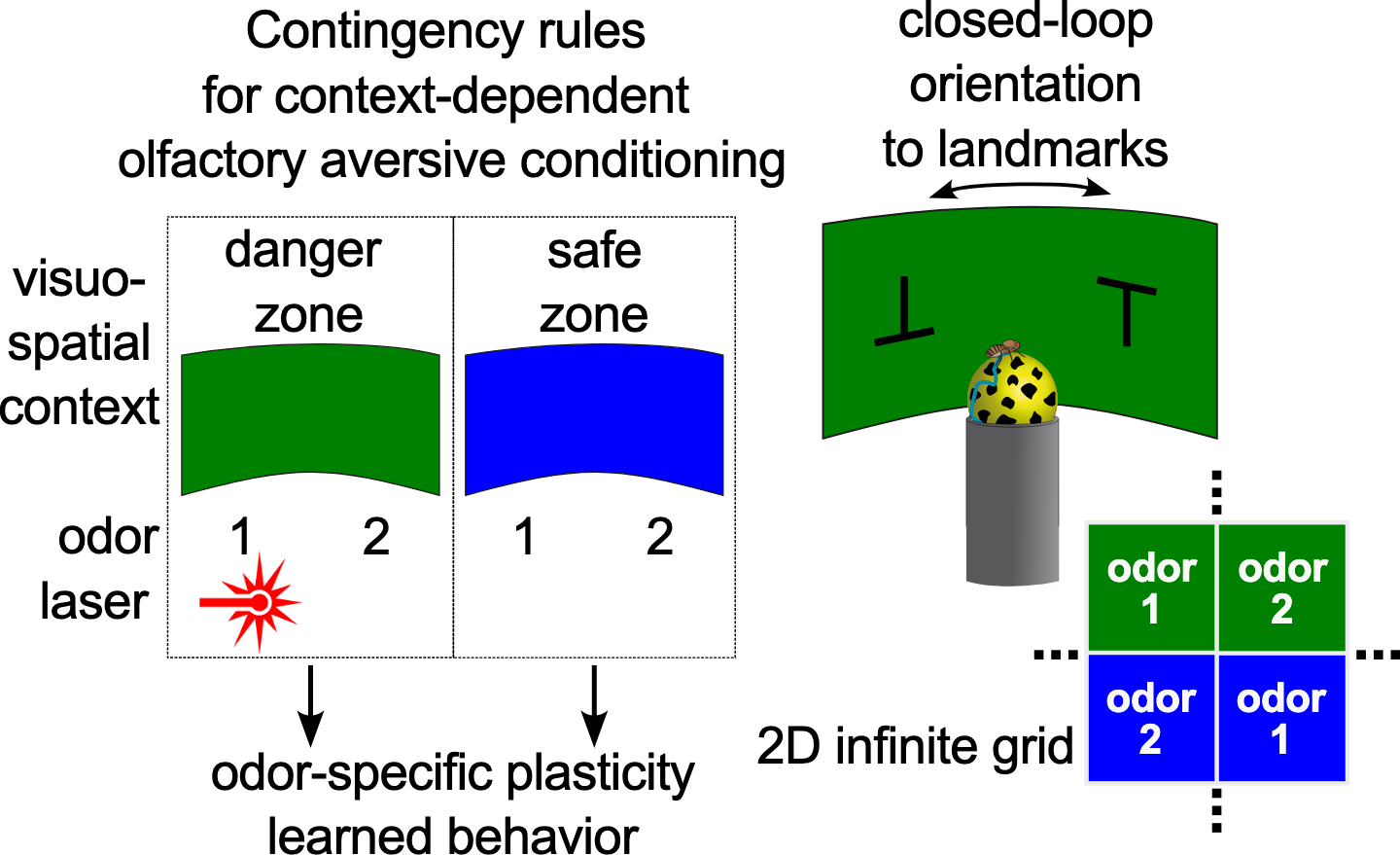
Postdoctoral work in the Felsenberg Lab: how visual context decides which olfactory memories are retrieved.
Neuronal mechanisms of context-dependent memory retrievalA fly learns that an odour predicts a targeted infrared laser pulse — but only in one visual context. I built a closed-loop virtual reality to put that context under experimental control, designed so the mushroom body can be imaged while the fly walks through it.
Before
PhD work on the circuits and behaviour of foraging flies, and earlier work on insect-inspired navigation in walking robots.
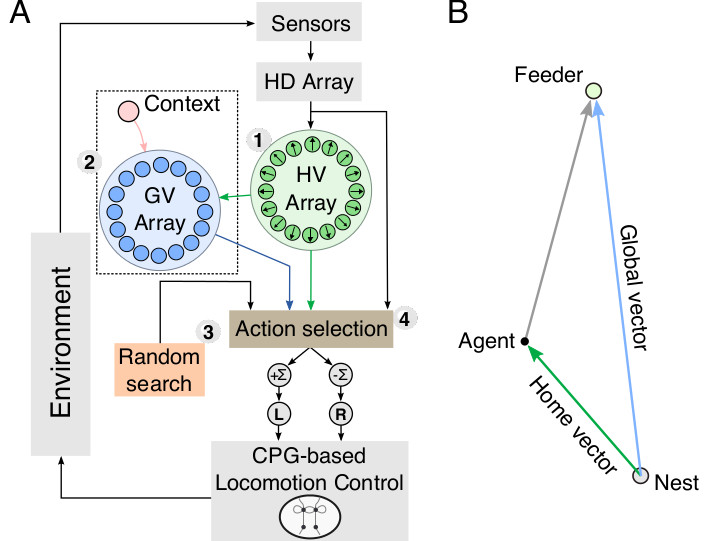
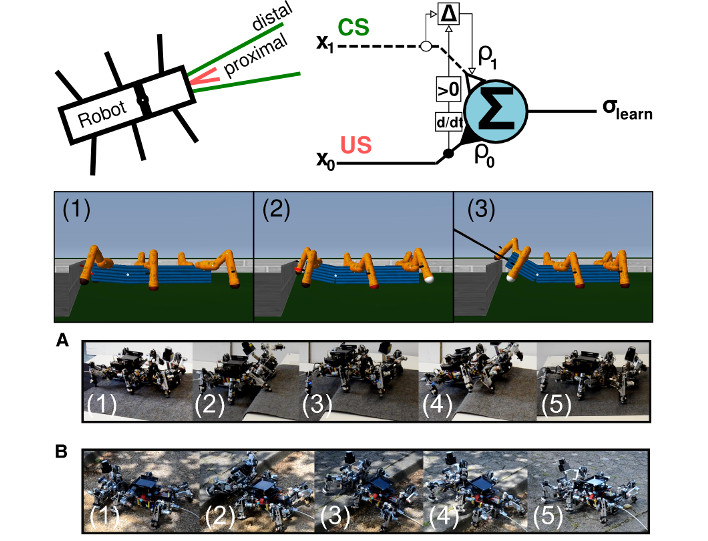
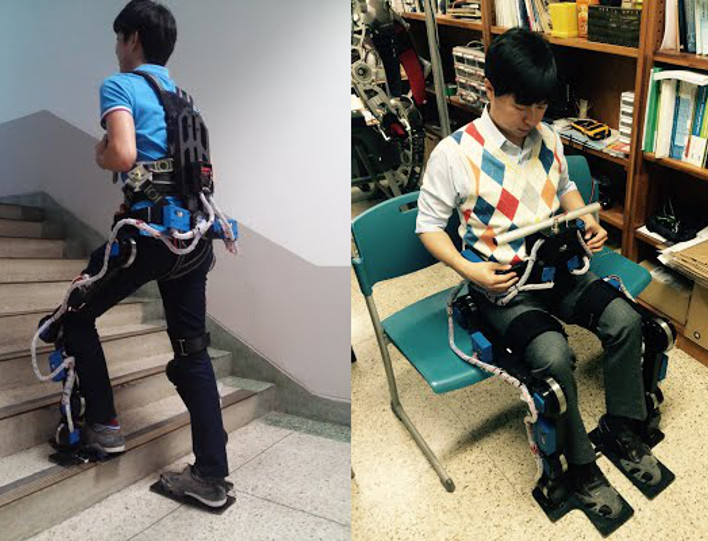
What shapes a fly's search after it finds foodA fly that finds food does not walk away from it — it searches the area it just left. How long it keeps searching, and how far it ranges, depends on what it has recently eaten and how sated it is, so the pattern widens as the memory of the meal fades.Curr. Biol. 2026 →Turning hunger and patch richness into a decisionHow long a fly stays at a patch of food depends both on how hungry it is and on how rich the patch is. This work traces the neurons that carry those two estimates and turn them into a decision to stay or move on.bioRxiv 2023 →optoPADA closed-loop system that detects the moment a fly starts to feed and fires a light pulse within milliseconds, so neurons can be activated while the animal eats rather than at some arbitrary time. It turns optogenetics from something done to a fly into something done during a behaviour.Illustration: Diogo Matias, Champalimaud Centre for the UnknowneLife 2019 →Adaptive vector navigation in embodied agentsA neural model of path integration that lets a walking agent forage away from its nest and return along a home vector, without a map.Front. Neurorobot. 2017 →Adaptive obstacle negotiation in embodied agentsA hexapod robot that learns to anticipate obstacles from its own sensory history rather than being told the terrain in advance.Front. Neurorobot. 2014 →Lower-limb exoskeletonEarly engineering work on a powered lower-limb exoskeleton, before I moved to neuroscience.
The full list of papers is on the
publications page.